Paid Advertising for Uniform Stores: Why It's a Dial, Not a Switch
10/15/2026
Paid advertising for uniform stores can feel like flipping a switch. Set a budget, launch an ad, and customers show up. In reality, it works more like adjusting a sound mix than flipping anything on or off.
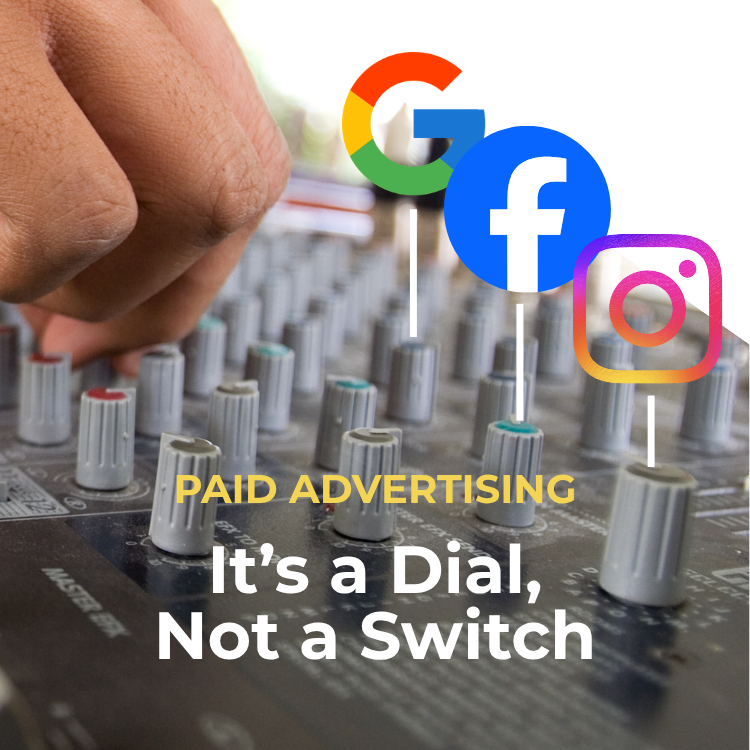
Think about a sound engineer at a show. There's no single setting that makes everything sound right. It takes small adjustments across several channels, volume here, tone there, until the mix clicks. Paid advertising works the same way. You're not aiming for one perfect ad. You're tuning audience, message, keywords, and visuals together until the right customers start responding.
In our blog, Uniform Store Content Marketing: Work Smarter, Not Harder With the 1 to 5 Rule, we covered how to build content that earns attention over time. Paid advertising is different. It's how you buy immediate reach while that content keeps working in the background. This post covers Step 4 of The Uniform Retailer's Digital Marketing Guide, and it starts with an honest expectation: paid ads can put your store in front of a lot of people fast, but finding the right people takes some tuning.
What Makes Paid Advertising Different From Everything Else You've Built
Your website, your Google listing, and your content all work toward the same goal over time. They build visibility gradually, through search engines, reviews, and useful information customers find on their own.
Paid advertising skips the waiting. You're paying a platform like Google or Meta for immediate access to an audience, instead of earning that visibility organically. That's the appeal, and also the catch. Reach is immediate. Results that actually convert may take a bit longer to dial in.
That distinction matters because it changes what success looks like early on. A campaign that doesn't convert in the first week isn't necessarily a failed campaign. It might just need a few adjustments to the mix.
Google and Meta Play Different Roles
Before you touch a single setting, it helps to know which instrument you're actually playing.
Google captures people who are already searching for something specific, like "scrub store near me" or "custom embroidery near me." They've told you what they want. Your job is to be there when they look.
Meta works differently. It introduces your store to people who aren't actively searching yet, through a new collection, a seasonal promotion, or a campaign built around an audience like nursing students. You're creating demand rather than capturing it.
Neither platform is better than the other. They solve different problems, and paid advertising for uniform stores usually works best when you know which problem you're actually trying to solve before you pick a platform.
Tuning Takes Time, and That's Normal
Once a campaign is live, the real work starts. Small adjustments to your audience, your keywords, your image or video, and your call to action all shift how a campaign performs.
This is where the sound engineer comparison holds up well. You wouldn't expect a perfect mix on the first try, and you shouldn't expect a perfect campaign on the first try either. You test one variable at a time, like swapping a headline or narrowing an audience, and watch what moves the needle. Keep what works, adjust what doesn't, and give each change enough time to show a real result before judging it. You can pursue running multiple campaigns at the same time or back-to-back to test your adjustments and record the secret formula to what gives you the best results.
Retailers who treat the first version of a campaign as a rough draft, not a final answer, tend to see stronger results over time than those who launch once and walk away.
Why You Can't Run Paid Ads Alone
Here's the part that's easy to miss. Paid advertising for uniform stores isn't a standalone tactic. It only works as part of a larger, connected strategy.
An ad is just the first step in a longer path. If a customer clicks an ad for embroidery services and lands on your general homepage, they're left to find their own way to the information they were promised. Most won't bother. You paid for the click, but the experience didn't deliver what the ad led them to expect.
Every ad needs a clear next step. That might be a dedicated page on your website, a specific WebStore collection, or a landing page built around one offer. The experience a customer lands on needs to match what the ad promised, answer their immediate question, and make the next action obvious, whether that's shopping online, requesting a quote, or calling your store.
This is why paid advertising works best when it's connected to everything else you've already built. Your keyword research, your website content, and your WebStore structure all feed into a stronger campaign. A disconnected ad pointed at the wrong page or a page with vague information is one of the most common reasons retailers walk away from paid advertising concluding it "doesn't work," when the real issue was the path after the click.
However, you’re managing paid advertising channels or thinking about starting to run paid campaigns for the first time, save this takeaway to carefully look at your intended paid campaign destinations. If the click through experience does not align to paid campaign for customer action, you have some optimizations to address first to earn the best results.
Start With One Clear Goal
You don't need to run campaigns on every platform at once. Start with one specific goal, like generating embroidery quote requests, reaching nursing students before clinicals begin, or promoting a seasonal collection through your WebStore.
From there, choose the platform that fits the goal, send traffic to a destination built to answer that specific need, and give yourself room to adjust before expecting a finished result.
BUILD YOUR PLAN: The PPC Campaign section of the Digital Marketing Planner walks you through choosing your goal, audience, platform, and landing destination before you spend a dollar.
Think of It as an Ongoing Mix, Not a One-Time Launch
The retailers who get the most out of paid advertising for uniform stores aren't the ones with the biggest budget. They're the ones willing to keep adjusting the mix, watching what resonates, and connecting each campaign to a clear destination customers can actually use.
That mindset shift, from flipping a switch to turning a dial, is often the difference between an ad that disappoints and one that keeps earning its budget back.
Build Your Paid Advertising Strategy With Our Free Guide + Planners
Paid advertising can expand your reach well beyond what your content and search visibility accomplish on their own, but only when it's connected to the rest of your marketing.
The Uniform Retailer's Digital Marketing Guide walks you through that connection, along with identifying your priority customers, strengthening your digital foundation, and building content that earns attention over time.
You'll also receive the companion Digital Marketing Planner in both Word and Excel, including the PPC Campaign section referenced in this article.
GET THE FREE DIGITAL MARKETING GUIDE + PLANNERS